
How to Safely Treat Fleas on Kittens
Finding a flea on a new kitten is a stressful moment for any owner, but it is also a medical priority that requires immediate attention.
While a flea infestation might just be an itchy nuisance for an adult cat, it can be life-threatening for a kitten. Kittens have very little blood volume, which means the fleas ingesting the kitten's blood can lead to severe anemia. In extreme cases, this loss of blood can be fatal, so treating the problem quickly is about more than just comfort.
Treating a kitten also requires a different approach than treating an adult cat. because their bodies are far more sensitive. They cannot metabolize certain chemicals yet, and their lack of body fat makes them prone to getting dangerously cold during baths.
When you understand how to safely remove these pests, you are protecting your kitten’s immediate health and setting them up for a comfortable, flea-free life.


What is the Golden Rule of Safety?
Before you apply any product to your new pet, you must check the label carefully to ensure it is safe for their specific age and weight.
Never use a dog flea product on a kitten. Many products designed for dogs contain permethrin, a chemical that is perfectly safe for canines but toxic to cats. Exposure to this chemical can cause tremors, seizures, and even death in kittens. If you have a dog in your home, make sure their flea treatment has dried completely before letting the kitten snuggle up to them.

How Do You Check Your Kitten for Fleas?
Fleas are masters of hiding, so you might not see the bugs themselves right away. Instead, you can look for the evidence they leave behind.
-
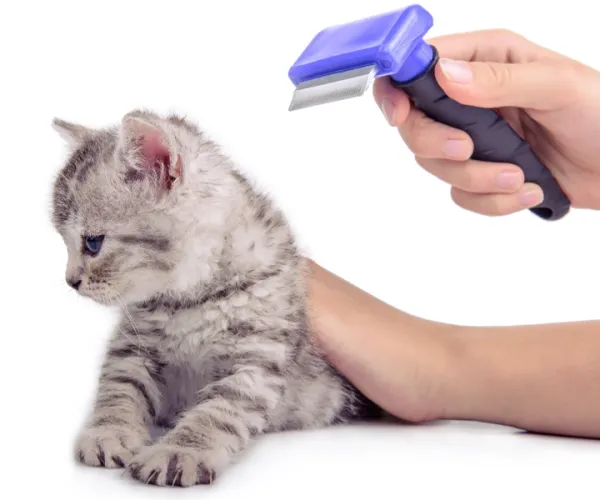
Use a Flea Comb
Run a fine-toothed metal comb through the fur around the neck and the base of the tail, where fleas often congregate.
Image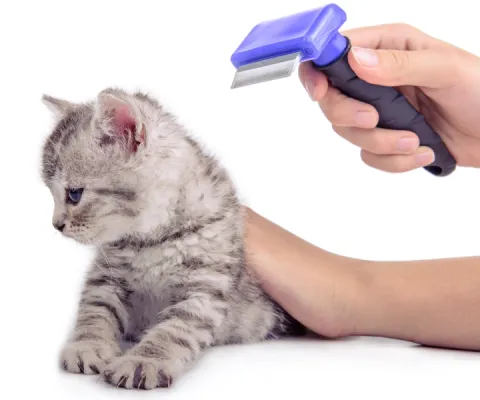
-
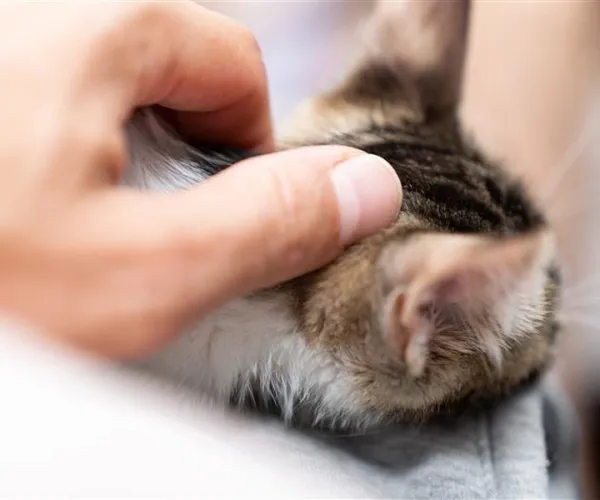
Look for "Flea Dirt"
If you see black specks in the fur, pick them up and place them on a wet paper towel. If the specks dissolve into red smears, you are looking at digested blood, which confirms the presence of fleas.
Image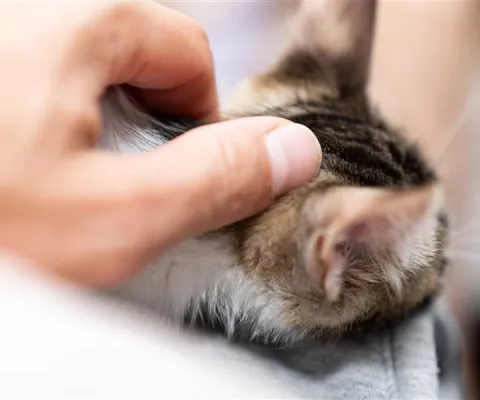
-
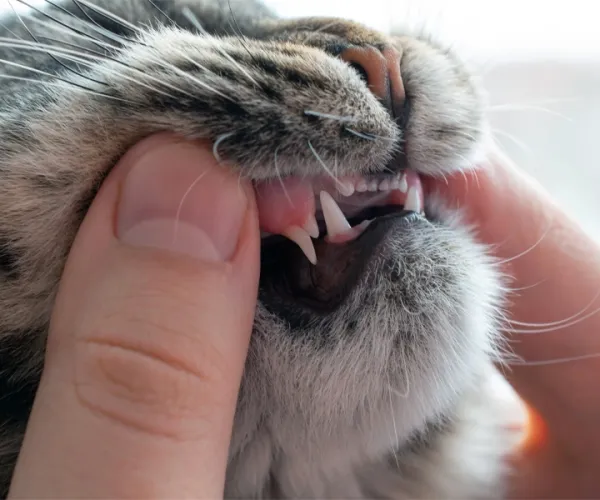
Check the Gums
A healthy kitten should have pink gums. If your kitten’s gums look pale or white, they may be suffering from anemia. This is a medical emergency that requires you to see a veterinarian immediately.
Image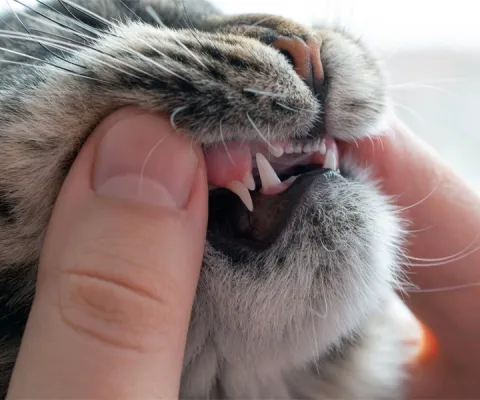
How Should You Treat Kittens 8 Weeks and Older?
Once kittens are 8 weeks of age and older and weigh 1.8lbs or more, veterinarians can prescribe prescription flea and parasite treatments.
Your veterinarian can weigh your kitten and prescribe the appropriate treatment as part of their wellness care.
How Can You Treat Your Home?
Vacuum Daily: The vibration of the vacuum stimulates pre-adult fleas to hatch, which allows you to suck them up before they find a host. Be sure to empty the canister outside immediately.
Wash Bedding: Cycle all pet bedding through a hot wash and dryer cycle to kill any hiding pests.
Frequently Asked Questions
Can I use essential oils to kill fleas?
Can I use essential oils to kill fleas?
No, you should avoid this. Many essential oils, such as tea tree, peppermint, and citrus, can be toxic to cats because their livers cannot process these compounds. It is always safer to stick to veterinarian-approved products.
My kitten never goes outside, so how did they get fleas?
My kitten never goes outside, so how did they get fleas?
You likely brought the fleas to them. Flea eggs can stick to shoes or pant legs and hitch a ride into your home. Other pets or even rodents entering your house can also carry them inside.
Is flea anemia really that common?
Is flea anemia really that common?
Yes, it is a significant risk. The Cornell Feline Health Center notes that while adult cats rarely suffer from flea anemia, it is a frequent and serious complication in small kittens.
How long does it take to get rid of an infestation?
How long does it take to get rid of an infestation?
It takes patience and persistence. Because of the complex flea life cycle, it can take up to 3 months of consistent treatment to fully clear a home of all eggs and larvae. The Companion Animal Parasite Council (CAPC) recommends year-round control to prevent these infestations from starting in the first place.

Common Flea Questions for Cats
Fleas on your cat can be more than an irritant. They can become a health issue for your cat. The information below will help you understand what health issues fleas can cause for your cat, how cats get fleas, how to check your cat for fleas, as well as how to treat your cat for flea infestations.
Can My Cat Get Fleas?
Cats are just as susceptible to flea infestations as dogs, even indoor cats. It’s important to recognize the risks of fleas and understand what can be done to protect your cat. Keep reading to learn how to spot fleas on your cat and learn how a monthly protection product like NexGard® COMBO (esafoxolaner, eprinomectin, and praziquantel topical solution) can help eliminate the need to deal with fleas.

Ticks on Cats
Just like dogs, cats can get ticks. Below you will find information about ticks on your cat. You’ll also learn how monthly protection, such as NexGard® COMBO (esafoxolaner, eprinomectin, and praziquantel topical solution), plays an important role in protecting your cat from ticks.
Important Safety Information
NexGard® COMBO (esafoxolaner, eprinomectin, and praziquantel topical solution) is for topical use only in cats. Safe for use in cats and kittens 8 weeks of age or older, weighing 1.8 pounds or more. Use with caution in cats with a history of seizures or neurologic disorders. The most frequently reported adverse reactions include vomiting, application site reactions, lethargy, and anorexia. If ingested, hypersalivation may occur. Avoid direct contact with application site until visibly dry. For more information, click here for full prescribing information.