
Cats and Fleas: What You Need to Know
Fleas on your cat can be more than an irritant. They can become a health issue for your cat. The information below will help you understand what health issues fleas can cause for your cat, how cats get fleas, how to check your cat for fleas, as well as how to treat your cat for flea infestations.


It’s always a good idea to talk to your vet about flea protection, including NexGard® COMBO (esafoxolaner, eprinomectin, and praziquantel topical solution) for cats.
Conditions Associated With Fleas
Flea bites can cause intense itching and irritation in animals.1 Some cats may develop an allergic reaction to flea saliva, resulting in redness, swelling, and the formation of small blisters and hair loss. Constant scratching due to flea bites can break the skin and lead to secondary bacterial infections. Fleas can also transmit flea tapeworms.
Ways Your Cat Might Get Fleas
Wildlife such as raccoons and opossums can make their way into your backyard, especially at night. These unwanted intruders are often infested with fleas and they can leave behind flea eggs. Those eggs will hatch and the yard can become infested with fleas within a matter of weeks. You or other pets can bring these into the house and those fleas can jump from you to another pet. Once indoors, these hitchhiker fleas will quickly set up shop. Flea eggs and the resulting larvae will quickly accumulate in carpeting, the cracks of hardwood floors, pet bedding, and furniture. The resulting indoor flea infestation that will affect household cats, even those who never step foot outside.
How Do I Check My Cat for Fleas?
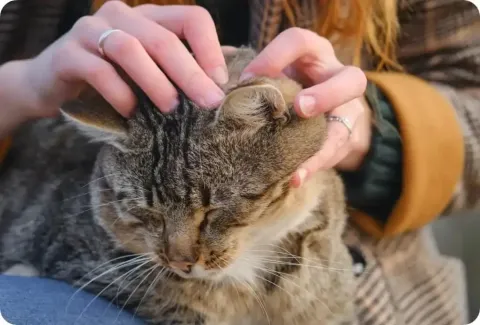
Run your fingers through your cat’s fur, looking for fleas or other signs of a flea infestation. Examine your cat’s coat closely. In addition to seeing fleas, there are several other signs (such as hair loss or small crusty bumps on your cat’s skin) that can be caused by a flea infestation. While fleas can be found anywhere, be sure to check your cat’s belly and base of their tail.
Use a flea comb, which will catch fleas, flea eggs, and flea dirt that are in the coat. To know if what you’re seeing is flea dirt and not just actual dirt, you can perform a flea dirt test. Pick up some of the black flecks with a flea comb. When smeared on a damp paper towel, flea dirt will turn red.2
Watch your cat’s behavior. Fleas can cause significant irritation, which can cause a change in your cat’s mood or behavior. Your cat may appear more restless or show other signs of discomfort from the flea infestation.
Key Takeaways About Fleas on Cats
Fleas on your cat can become a health issue. Your veterinarian can help.
Check your cat for fleas often. As it may take months to eliminate fleas from your home after a flea infestation, the sooner you stop an infestation the better.
Always consult with your vet when it comes to your cat’s health.
Ask your vet about NexGard COMBO topical solution for cats.
One-And-Done Monthly Protection for Cats
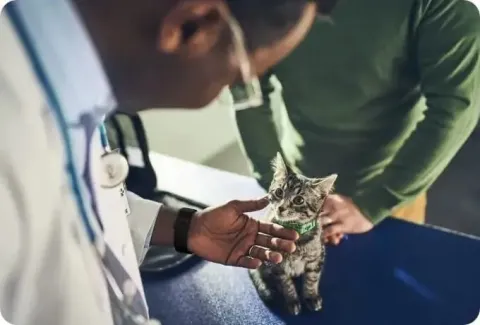
All cats need parasite protection. NexGard COMBO topical solution is the first and only product specifically formulated for cats that protects against fleas, ticks, heartworm disease, roundworms, hookworms, and tapeworms in one easy-to-apply topical solution. It’s safe for kittens 8 weeks of age and older, weighing 1.8 lbs or more.
FAQs About Fleas on Cats
Can indoor cats get fleas?
Can indoor cats get fleas?
Yes, even indoor cats can get fleas that are tracked inside by humans or other pets.
Are there any natural remedies to treat cat fleas?
Are there any natural remedies to treat cat fleas?
Most cats will groom themselves several times a day, which helps to keep fleas at bay. That said, you can comb your cat’s haircoat using a flea comb once a day, paying particular attention to the armpits, neck, and base of the tail as these are areas that are more challenging for the cat to get to. If you want to use a flea treatment to augment the self-grooming and combing, then please consult with your veterinarian.
- Fleas. CAPC Pets and Parasites. Accessed May 31, 2022. https://petsandparasites.org/dog-owners/fleas
- Fleas. Centers for Disease Control and Prevention. Accessed May 31, 2022. https://cdc.gov/fleas/index.html
Important Safety Information
NexGard® COMBO (esafoxolaner, eprinomectin, and praziquantel topical solution) is for topical use only in cats. Safe for use in cats and kittens 8 weeks of age or older, weighing 1.8 pounds or more. Use with caution in cats with a history of seizures or neurologic disorders. The most frequently reported adverse reactions include vomiting, application site reactions, lethargy, and anorexia. If ingested, hypersalivation may occur. Avoid direct contact with application site until visibly dry. For more information, click here for full prescribing information.