
About Intestinal Parasites
Roundworms and hookworms are two of the most common parasitic worms in pets. Left untreated, these intestinal parasites can make an animal seriously sick. That’s why it’s important to learn about them, to find out about treatment products that can protect your dog or cat, and to know what to do if your pet ever becomes infected.


Roundworms, Hookworms, and Your Pet
Roundworms and hookworms are the most common parasites that can live in your pet’s intestine. They can cause several gastrointestinal complications, and they can be especially dangerous in young kittens and puppies.
Luckily, NexGard® PLUS (afoxolaner, moxidectin, and pyrantel chewable tablets) is safe for dogs 8 weeks or older, weighing 4 pounds or more, and NexGard® COMBO (esafoxolaner, eprinomectin, and praziquantel topical solution) is safe for kittens 8 weeks or older, weighing 1.8 pounds or more.
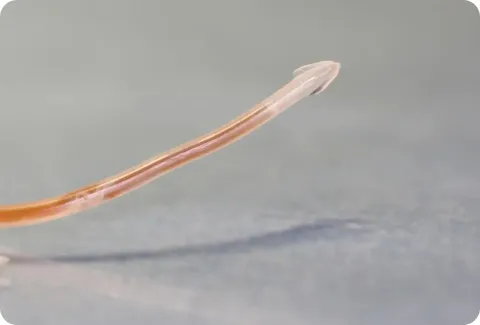
Roundworms
Roundworms are extremely common in young dogs, infecting over 90% of puppies. Mother dogs pass roundworms to their puppies prior to birth as well as through their milk while the puppies nurse. Kittens can also become infected while nursing from their mothers. Because roundworms feed off the partially digested food in the intestinal tract, they rob puppies and kittens of vital nutrients. They can also cause GI blockages.
Adult dogs and cats contract roundworms by ingesting infective roundworm eggs from their environment, or by eating infected animals such as rodents.1 Roundworm eggs persist in the environment for long periods of time which makes clean-up difficult. The best practice is to scoop the poop promptly to minimize environmental contamination. Your veterinarian can easily diagnose a roundworm infection by using a fecal exam to check your pet's feces for roundworm eggs.
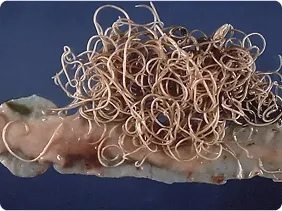
Hookworms
Hookworms are intestinal parasites that live in your pet’s small intestine. Hookworms attach to the intestinal wall with small teeth and consume the pet’s blood. Hookworms can cause blood loss, anemia, weight loss and diarrhea. In young puppies and kittens severe anemia and, in some cases, death can result.
Female worms produce large amounts of eggs that are passed in the feces of infected pets. Once the eggs are in the environment, they hatch into larvae within days. Dogs and cats acquire hookworms when they ingest infective larvae in the environment, or by the infective larvae penetrating their skin. Cats can also become infected by eating a rodent carrying the infective hookworm larvae. Puppies are commonly infected by consuming their mother’s milk, but this does not occur with kittens.
Unlike roundworms, hookworm eggs do not persist in the environment for long periods of time and the larvae are very susceptible to environmental changes. However, prompt removal of pet feces from the environment reduces the risk of infection. As with roundworms, your veterinarian can easily check for hookworms with a fecal examination.
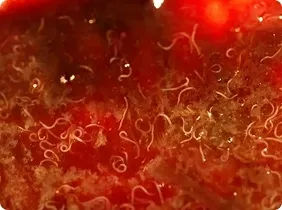
Look for the Warning Signs
The most common way to diagnose a roundworm or hookworm infection is with a test called fecal flotation, which your vet can perform.1,2 This is a test performed on your pet’s stool sample that allows your vet to detect the presence of parasite eggs. Prompt treatment of pets can help reduce further damage as well as mitigate the possibility of the worms spreading. Common signs of roundworms and hookworms include:1,3
Diarrhea
Vomiting
Weight loss
Poor coat appearance
Lethargy
Dehydration
Blood in stool
Treatment for Roundworms and Hookworms
Your veterinarian can recommend effective treatment options for roundworms and hookworms. They can also prescribe monthly parasite treatments such as NexGard PLUS chews for dogs or NexGard COMBO topical solution for cats.

- Carithers D, Miro G. Pet Owner Educational Atlas: Parasites. Zaragoza, Spain, Grupo Asis. 2012.
- Ascarid for Cats. Companion Animal Parasite Council. Accessed May 1, 2025. https://capcvet.org/guidelines/ascarid
- Hookworms for Cat. Companion Animal Parasite Council. Accessed May 1, 2025. https://capcvet.org/guidelines/hookworms
Important Safety Information
NexGard® PLUS (afoxolaner, moxidectin, and pyrantel chewable tablets) is safe for puppies at 8 weeks, weighing 4 pounds or more. The most frequently reported adverse reactions include diarrhea, vomiting, lethargy, and itching. Use with caution in dogs with a history of seizures or neurologic disorders. Dogs should be tested for existing heartworm infection prior to starting a preventive. For more information, click here for full prescribing information.
NexGard® COMBO (esafoxolaner, eprinomectin, and praziquantel topical solution) is for topical use only in cats. Safe for use in cats and kittens 8 weeks of age or older, weighing 1.8 pounds or more. Use with caution in cats with a history of seizures or neurologic disorders. The most frequently reported adverse reactions include vomiting, application site reactions, lethargy, and anorexia. If ingested, hypersalivation may occur. Avoid direct contact with application site until visibly dry. For more information, click here for full prescribing information.
NexGard® (afoxolaner) is for use in dogs only. Safe for use in puppies 8 weeks of age or older, weighing 4 pounds or more. The most frequently reported adverse reactions include vomiting, itching, lethargy, diarrhea, and lack of appetite. The safe use of NexGard in pregnant, breeding, or lactating dogs has not been evaluated. Use with caution in dogs with a history of seizures or neurologic disorders. For more information, click here for full prescribing information.