
PET EDUCATION
Learn More About
Parasites & Protection
Internal parasites like hookworms and roundworms, and external parasites like fleas and ticks are common in dogs and cats.
Even ones that live exclusively indoors. Browse through these articles to know what you're up against and how you can protect your pet.
Flea Questions for Dogs
How do you get rid of fleas on your dog? Protection is the key.
Start your dog on a flea control product like NexGard® PLUS (afoxolaner, moxidectin, and pyrantel chewable tablets) or NexGard® (afoxolaner). Use with caution in dogs with a history of seizures or neurologic disorders.


Tick Protection Tips for Dogs
All dogs are at risk of tick bites. A single tick bite can lead to multiple health concerns. This is why it’s so important to be proactive and do everything you can to reduce your dog’s risk of tick exposure as well as provide the monthly, year-round protection of either NexGard® PLUS (afoxolaner, moxidectin, and pyrantel chewable tablets) or NexGard® (afoxolaner).
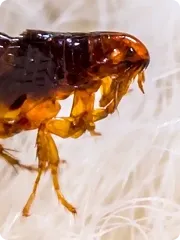
The Power of Flea Protection
Indoors and outdoors, fleas can be on the lookout for your pet. That’s why it’s important to talk to your vet about protecting your pet year-round with monthly protection products.

Common Flea Questions for Cats
Fleas on your cat can be more than an irritant. They can become a health issue for your cat. The information below will help you understand what health issues fleas can cause for your cat, how cats get fleas, how to check your cat for fleas, as well as how to treat your cat for flea infestations.
Browse through more to learn more about parasites and protection
Articles by category selection

How to Handle Tapeworms in Cats
Image
Did you know cats can have tapeworm infections? It’s a good idea to talk to your vet about treatment products including NexGard® COMBO (esafoxolaner, eprinomectin, and praziquantel topical solution) for cats.

Common Intestinal Parasites in Dogs
Image
Two of the most common types of intestinal parasites in dogs are hookworms and roundworms

How do Cats Get Worms?
Image
Many pet owners are aware that cats can get parasitic worms, but they may not know what kinds of worms pose a problem for cats.

Common Flea Questions for Cats
Image
Fleas on your cat can be more than an irritant. They can become a health issue for your cat. The information below will help you understand what health issues fleas can cause for your cat, how cats get fleas, how to check your cat for fleas, as well as how to treat your cat for flea infestations.

Common Questions About Heartworm Disease
Image
Heartworm disease is a serious and potentially fatal condition. Fortunately, it is preventable with the use of monthly preventive medications such as NexGard® PLUS (afoxolaner, moxidectin, and pyrantel chewable tablets).
FAQs and Learning
What is heartworm disease?
What is heartworm disease?
Heartworm disease is a serious and potentially fatal disease in dogs and cats. It is transmitted to pets via mosquitoes, and even a single bite of infected mosquito poses risk of heartworm disease. Adult heartworms live in blood vessels of lungs, and in severe cases heart, causing irreversible damage.1
How do dogs get heartworm disease?
How do dogs get heartworm disease?
Dogs get heartworms from infected mosquitoes. Heartworm larvae enter the dog through the mosquito bite and over time develop into adult heartworms, which cause heartworm disease. One bite is all it takes.2
How do cats get worms?
How do cats get worms?
The most common parasitic threats for cats are hookworms, roundworms, tapeworms and heartworms. Cats can get heartworms by being bitten by an infected mosquito. One bite is all it takes. Cats become infected with roundworms via ingestion of eggs from a contaminated environment or by the ingestion of rodents with infective larvae. Cats become infected with hookworms via ingestion of infective larvae from the environment, larval penetration of their skin, and/or ingestion of other hosts with infective larvae in their tissues. In addition, cats can get tapeworms by ingesting infected fleas through grooming. NexGard® COMBO (esafoxolaner, eprinomectin, and praziquantel topical solution) is the only broad-spectrum feline parasiticide that kills fleas and ticks, prevents heartworm disease, treats and controls roundworms, hookworms, and tapeworms.
What are signs of fleas in cats and dogs?
What are signs of fleas in cats and dogs?
Fleas often cause intense itching to the skin of cats and dogs as a result of their bites. In turn, cats and dogs will often chew or scratch at these itchy areas, which can cause further skin irritation, hair loss, and scabs. Fleas have specific sites on the pet's body they prefer, specifically the tail head area on the back, the belly between the rear legs, and around the head and neck. If the owner parts the fur in these areas, they may see actual fleas or dark specs resembling dirt or pepper in the hair or on the skin. This is flea dirt or flea faeces consisting or partially digested blood from the pet.
What are the symptoms of ticks on cats and dogs?
What are the symptoms of ticks on cats and dogs?
Ticks can be hard to spot on dogs and cats and initially, as they create few, if any symptoms. They attach to the skin, underneath the fur making them practically invisible. They also attach to hard-to-reach areas such as under collars or in the armpits. While cats and dogs may eventually gnaw or scratch at the tick attachment sites, ticks have numbing properties to their saliva, which hides their presence. Owners are advised to run their fingers through the pet's haircoat on a daily basis to feel for attached ticks, or look for areas of displaced fur, which occurs as the ticks enlarge. Even with the best vigilance, larval and nymphal stages may be impossible to detect. Ticks can transmit serious and sometimes life-threatening illnesses, which manifest long after the tick has fallen off.
How common are worms in puppies?
How common are worms in puppies?
More than 90% of puppies under 3 months of age are infected with roundworms.3 NexGard® PLUS chews (afoxolaner, moxidectin, and pyrantel chewable tablets) are labeled for dogs only and are safe for puppies 8 weeks or older, weighing 4 lbs or more.
- Heartworm. Companion Animal Parasite Council website. Accessed April 7, 2025.https://capcvet.org/guidelines/heartworm
- Carithers D, Miro G. Pet Owner Educational Atlas: Parasites. Zaragoza, Spain, Grupo Asis. 2012. ownerresources/heartworm-basics
- Schantz PM. Zoonotic ascarids and hookworms: the role for veterinarians in preventing human disease. Accessed February 24, 2025.
Important Safety Information
NexGard® PLUS (afoxolaner, moxidectin, and pyrantel chewable tablets) is safe for puppies at 8 weeks, weighing 4 pounds or more. The most frequently reported adverse reactions include diarrhea, vomiting, lethargy, and itching. Use with caution in dogs with a history of seizures or neurologic disorders. Dogs should be tested for existing heartworm infection prior to starting a preventive. For more information, click here for full prescribing information.
NexGard® COMBO (esafoxolaner, eprinomectin, and praziquantel topical solution) is for topical use only in cats. Safe for use in cats and kittens 8 weeks of age or older, weighing 1.8 pounds or more. Use with caution in cats with a history of seizures or neurologic disorders. The most frequently reported adverse reactions include vomiting, application site reactions, lethargy, and anorexia. If ingested, hypersalivation may occur. Avoid direct contact with application site until visibly dry. For more information, click here for full prescribing information.
NexGard® (afoxolaner) is for use in dogs only. Safe for use in puppies 8 weeks of age or older, weighing 4 pounds or more. The most frequently reported adverse reactions include vomiting, itching, lethargy, diarrhea, and lack of appetite. The safe use of NexGard in pregnant, breeding, or lactating dogs has not been evaluated. Use with caution in dogs with a history of seizures or neurologic disorders. For more information, click here for full prescribing information.