
Can My Cat Get Fleas?
Cats are just as susceptible to flea infestations as dogs, even indoor cats. It’s important to recognize the risks of fleas and understand what can be done to protect your cat. Keep reading to learn how to spot fleas on your cat and learn how a monthly protection product like NexGard® COMBO (esafoxolaner, eprinomectin, and praziquantel topical solution) can help eliminate the need to deal with fleas.

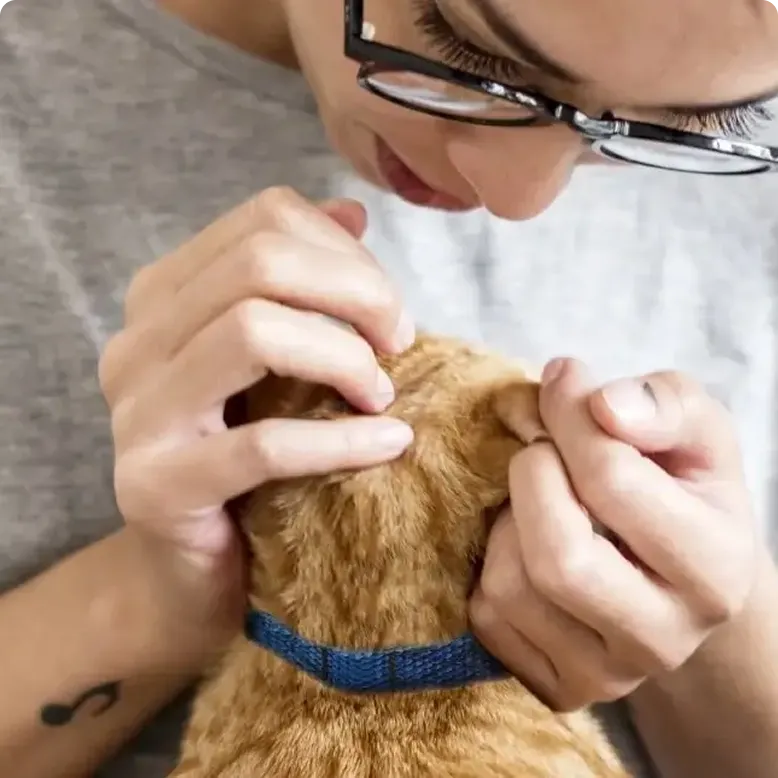
Signs of Fleas on Cats
Since cats are such good groomers, they will often groom off some of the fleas before you see them. It’s not uncommon to notice other signs of fleas, even before seeing them on your cat.
These signs include:
Scratching
Hair loss
Skin irritation
Small crusty bumps on the skin
Excessive grooming
Flea dirt (flea feces) in your cat’s fur
How to Check Your Cat for Fleas
-
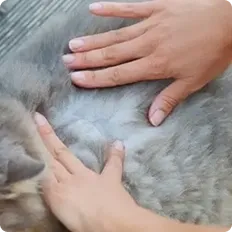
Run your fingers through your cat’s fur, looking for fleas or other signs of a flea infestation. Examine your cat’s coat closely. In addition to seeing fleas, there are several other signs (such as hair loss or small crusty bumps on your cat’s skin) that can be caused by a flea infestation. While fleas can be found anywhere, be sure to check your cat’s belly and base of their tail.
Image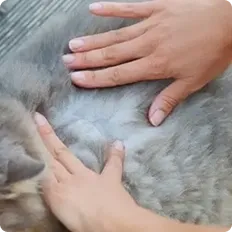
-
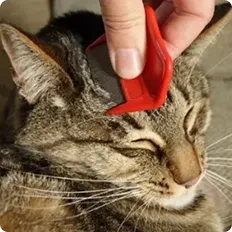
Use a flea comb, which will catch fleas and flea dirt that are in the coat. To know if what you’re seeing is flea dirt and not just actual dirt, you can take some of the black flecks that have collected on the comb and place them on a paper towel. Apply a drop of water to the flecks and smear them. If it’s flea dirt, the flecks will dissolve and turn dark red.
Image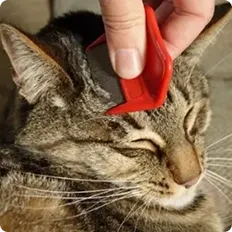
-
Watch your cat’s behavior. Fleas can cause significant irritation, which can cause a change in your cat’s mood or behavior. Your cat may appear more restless or show other signs related to the discomfort from the flea infestation.
Image

How Do Cats Get Fleas?
All cats are susceptible to flea infestations, even indoor cats. Fleas can easily enter your home from you or another pet in the house. They can also jump from pet to pet, no matter the species.
As flea-infested animals move through the environment (outside or inside), flea eggs drop from their coats into their surroundings. In fact, flea eggs and larvae can be present in carpets, bedding, and furniture, allowing the infestation to persist and affect your cat. This is why regular flea control is so important.
Are Fleas Harmful to Cats?
If you notice fleas on your cat, you should take action to eliminate them immediately. Flea bites aren’t just painful, they can negatively impact your cat’s health, too. Excessive scratching can lead to skin problems and may cause your cat a lot of stress and discomfort. Fleas can also transmit tapeworms. In extreme cases, heavy flea infestations can cause anemia in cats.1 A monthly parasiticide such as NexGard COMBO topical solution will protect your cat from fleas.

How Do You Treat Cats for Fleas?
In addition to regularly scheduled vet visits, you can treat fleas on cats by giving them year-round, monthly protection with a product like NexGard COMBO topical solution that kills fleas and ticks, prevents heartworm disease, treats and controls roundworms, hookworms, and tapeworms.
NexGard COMBO topical solution is safe for kittens 8 weeks of age or older, weighing 1.8 pounds or more.
How Do I Get Rid of an Infestation?
Before starting your cat on a flea control product, such as NexGard COMBO topical solution, it’s important to take steps to remove developing flea stages from your home:2
To reduce the number of flea eggs, larvae, and pupae in your cat’s environment, you can vacuum the areas where your cat spends most of its time and dispose of the contents outside in a sealed bag.
You should also wash your cat’s bedding using hot water, and dry on the highest dryer setting.
As it may take months to clear up an existing infestation, it may be helpful to consult with a professional pest control specialist.
Even after the infestation has been eliminated, it’s recommended to provide monthly protection such as NexGard COMBO topical solution for cats as part of their monthly care.
- Fleas. Companion Animal Parasite Council (CAPC). Accessed April 28, 2025. https://capcvet.org/guidelines/fleas
- Fleas. Pets & Parasites. Accessed April 28, 2025. https://www.petsandparasites.org/cat-owners/fleas
Important Safety Information
NexGard® COMBO (esafoxolaner, eprinomectin, and praziquantel topical solution) is for topical use only in cats. Safe for use in cats and kittens 8 weeks of age or older, weighing 1.8 pounds or more. Use with caution in cats with a history of seizures or neurologic disorders. The most frequently reported adverse reactions include vomiting, application site reactions, lethargy, and anorexia. If ingested, hypersalivation may occur. Avoid direct contact with application site until visibly dry. For more information, click here for full prescribing information.