
Your Pet Deserves Tick Protection
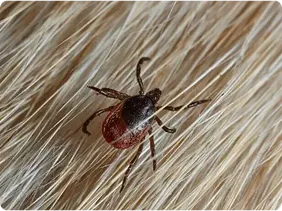
There are several species of ticks, and most can be vectors of dangerous diseases. When a tick gets on a pet, it crawls under the animal’s fur and attaches to the skin. This makes them difficult to spot. The longer a tick feeds on a pet, the greater the likelihood of disease transmission, so daily checks are recommended to reduce the risk. Remember to consult with your veterinarian about other ways to protect your pet.


Ticks Can Be Found Any Season
There are several species of tick found across the US, and some of these are expanding their ranges. These include the American dog tick, the brown dog tick, the lone star tick, and the black-legged tick. In the case of the black-legged tick, the number of counties with established populations has doubled in the past 20 years1. In addition, black-legged ticks can be active when the temperatures are just above freezing. No matter where you live, year-round protection is essential.2
Reducing Tick Encounters
It can be challenging to prevent your pet from encountering ticks, especially if your pet has an active lifestyle. Ticks can be found almost anywhere, but knowing where they lurk can help keep your pet out of harm’s way. Areas with tall grass or brush, as well as wooded areas are all ideal tick habitats. You should avoid taking your pet into these areas, or make sure your pet has protection if you do. Remember that even if you keep your pet clear of these areas, ticks can get on you, hitch a ride home, then get on your pet later. Talk to your vet about the treatment options to protect your pet from ticks.
Can Ticks Live in Your House?
Ticks aren’t always found just in the wilderness. Urban wildlife like white-tailed deer, raccoons, coyotes, and rodents can bring ticks shockingly close to your doorstep. Most ticks won’t invade your home, but one particular tick will – the brown dog tick. This tick adapts very well to living in structures (including homes) and it creates serious problems when it does.
While most tick control products are effective against brown dog ticks, home infestations of the brown dog tick will require the services of a licensed pet control operator to get under control.
Key Takeaways About Ticks
- Ticks can carry serious, sometimes life-threatening diseases.
- Ticks can be found any time of the year and in many locations that pets frequent.
- If you live in areas with high concentrations of ticks, it is imperative that you provide protection to your pets.

- Eisen R, Eisen L, Beard C. County-scale distribution of Ixodes scapularis and Ixodes pacificus (Acari: Ixodidae) in the continental United States. J Med Entomol. 2016;23(2):349-386. doi:10.1093/jme/tjv237
- Ixodes scapularis and Ixodes pacificus: Overview of Life Cycle. Companion Animal Parasite Council. Accessed April 28, 2025. https://capcvet.org/guidelines/ixodes-scapularis-and-ixodes-pacificus
Important Safety Information
NexGard® PLUS (afoxolaner, moxidectin, and pyrantel chewable tablets) is safe for puppies at 8 weeks, weighing 4 pounds or more. The most frequently reported adverse reactions include diarrhea, vomiting, lethargy, and itching. Use with caution in dogs with a history of seizures or neurologic disorders. Dogs should be tested for existing heartworm infection prior to starting a preventive. For more information, click here for full prescribing information.
NexGard® COMBO (esafoxolaner, eprinomectin, and praziquantel topical solution) is for topical use only in cats. Safe for use in cats and kittens 8 weeks of age or older, weighing 1.8 pounds or more. Use with caution in cats with a history of seizures or neurologic disorders. The most frequently reported adverse reactions include vomiting, application site reactions, lethargy, and anorexia. If ingested, hypersalivation may occur. Avoid direct contact with application site until visibly dry. For more information, click here for full prescribing information.
NexGard® (afoxolaner) is for use in dogs only. Safe for use in puppies 8 weeks of age or older, weighing 4 pounds or more. The most frequently reported adverse reactions include vomiting, itching, lethargy, diarrhea, and lack of appetite. The safe use of NexGard in pregnant, breeding, or lactating dogs has not been evaluated. Use with caution in dogs with a history of seizures or neurologic disorders. For more information, click here for full prescribing information.